The Deal That Finally Held: What's In It, What's Missing, and What Happens Next
⚡ UPDATE 5 — August 12, 2026
A second memorandum of understanding has been signed — and this time, both presidents put their names to it.
President Trump signed the document at the Palace of Versailles during his meeting with French President Macron. Iranian President Masoud Pezeshkian signed separately and posted an image on X calling it "a historic document and a message from a strong Iran: peace will be achieved in the shadow of mutual respect." Trump told reporters leaving Versailles: "It's signed. Signed in Versailles. Just signed it." A formal ceremony is scheduled for Friday in Geneva.
This MOU differs from the June 17 agreement in three significant ways. First, both heads of state have signed — the June 17 framework was signed by negotiators and disputed by Iranian state media within hours. Second, the route dispute that destroyed the first MOU has been partially resolved through a new "middle corridor" compromise, agreed between Iran and Oman after weeks of technical talks covering navigational, legal, security, and environmental aspects. Third, the US has formally conceded some form of Iranian management authority over the strait — Reuters confirmed this week that "the concession has already been made regarding some form of control over Hormuz." That concession was Iran's central war aim from day one.
What the MOU contains: the strait reopens toll-free for 60 days, after which Iran and Oman will "define the future administration" of the waterway. The US terminates all sanctions and releases frozen Iranian assets. A 60-day nuclear negotiation window begins immediately.
What it does not contain: the fate of Iran's enriched uranium stockpile, the enrichment moratorium duration, Iran's ballistic missile programme, Israel's security red lines, and the post-60-day administration of the strait — all deferred into the negotiation window.
The Lebanon question — which derailed the first MOU in late June — is addressed through a parallel Israel-Hezbollah ceasefire process. Whether it holds is the most immediate threat to this agreement.
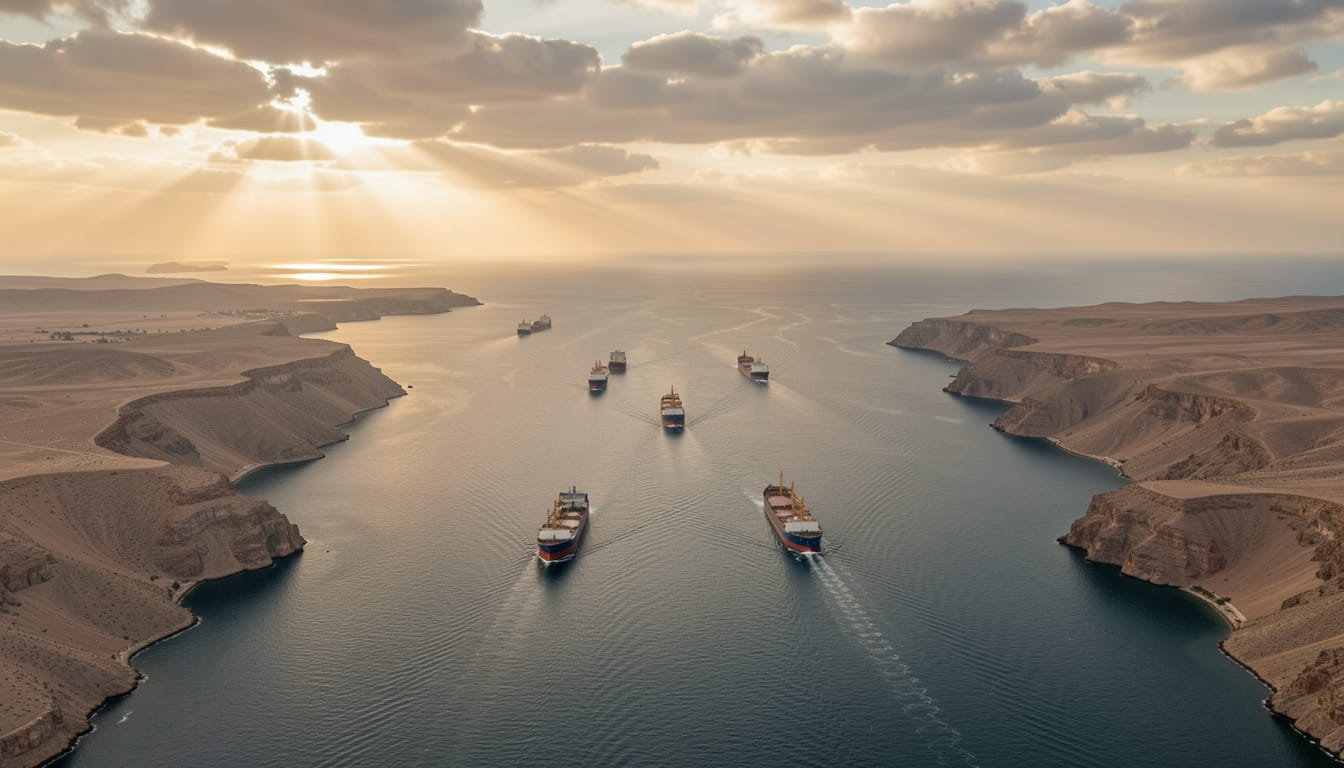
165 days after the Strait of Hormuz closed, it is formally reopening. Whether this MOU proves more durable than its predecessor depends on the 60 days that follow. We will be tracking every development.
⚡ UPDATE 4 — July 8, 2026 The deal that this post described has collapsed.
On Tuesday July 7 — during Khamenei's funeral and while Trump was attending the NATO summit in Ankara — Iran attacked three commercial vessels transiting the Strait of Hormuz. The US responded overnight with more than 80 strikes on Iranian targets including Kharg Island, Iran's primary oil export hub, and the port cities of Bandar Abbas, Sirik, and Qeshm Island. Iran launched drone attacks on Bahrain's Isa Air Base, hosting US forces. Air defences activated across Bahrain and Kuwait.
On Wednesday morning, sitting alongside NATO Secretary General Mark Rutte at the Beştepe Presidential Compound in Ankara, Trump declared the ceasefire over. "I think it's over. I don't want to deal with them anymore. They're scum. As far as I'm concerned it's just a waste of time." He added: "If they had a nuclear weapon, they'd use it." Trump simultaneously reimposed sanctions on Iranian oil sales — reversing one of the MOU's core provisions — but said he would allow his negotiators to "keep talking if they want."
NATO Secretary General Rutte backed the US strikes: "When you have a ceasefire and Iran is basically violating it, I think it is totally crucial that the US forcefully react." Iran's nuclear programme and freedom of navigation through the Strait of Hormuz were placed on the NATO summit's formal agenda for the day.
Brent crude surged 5.6% to above $78 on the news — reversing weeks of post-deal price recovery in a single session.
The Islamabad MOU was signed exactly three weeks ago. It lasted 21 days before its two core provisions — no Iranian attacks on shipping, and sanctions relief for Iran — both collapsed simultaneously. The 60-day nuclear negotiation window, which had barely begun, is now functionally suspended. Whether talks resume, and under what framework, is the defining question of the next phase of this crisis.
The Hormuz Strait Monitor will continue tracking developments as they unfold.
⚡ UPDATE 3 — July 1, 2026, afternoon Two weeks into implementation, the deal is holding — but only just. The past fortnight has tested every provision of the Islamabad MOU simultaneously.
The most alarming development: Iran has reportedly lost track of mines it planted in the Strait of Hormuz. The New York Times, citing US officials, reported that Iran's decentralised mining campaign — conducted by small boats without a clear command chain — left no reliable record of where every mine was placed. Some may have drifted from their original positions on sea currents. Neither Iran nor the United States has a complete picture of how many mines remain or where they are. Iran has 30 days under the MOU to clear them. Fifteen of those days have already passed.
The demining dispute has become the crisis within the crisis. France and Oman offered to join mine-clearing operations alongside international partners. Iran's deputy foreign minister rejected the offer flatly, warning France against "provocations" and insisting the MOU assigns demining solely to Tehran. The French-led Northwood coalition — which has been planning this mission since April — remains on standby, unable to deploy.
On the water, the past week produced two rounds of US retaliatory strikes after Iran attacked commercial vessels — the Singapore-flagged Ever Lovely and the Panama-flagged Kiku. Iranian missiles struck US bases in Bahrain and Kuwait. Both sides agreed on June 28 to halt further attacks. Technical talks resumed in Doha on July 1, with four working groups — Sanctions, Nuclear, Reconstruction, and Monitoring — established to manage the 60-day process. Iran received $6 billion in previously frozen assets held in Qatar.
Traffic is recovering but remains deeply depressed. Around 25 vessels per day are transiting versus the pre-war average of 110. War risk insurance remains at 10 to 40 times pre-war levels. The central channel is still mined. Major Western carriers — Maersk, MSC, CMA CGM, Hapag-Lloyd — remain on Cape of Good Hope routing.
Carnegie Endowment senior fellow Aaron David Miller put it bluntly on CBS: "We are not going back to February 27, where the straits were free and unfettered."
The 60-day MOU window expires around August 17. The optimistic mine-clearing timeline — 40 to 50 days from when operations can safely begin — runs right to the edge of that window. The diplomatic and physical timelines are on a collision course. We have published a full analysis of the mine-clearing problem and what it means for the recovery timeline.
⚡ UPDATE 2 — June 15, 2026, afternoon Two significant developments this morning raise questions about the deal's durability ahead of Friday's signing.
First, the toll-free provision: IRGC-affiliated Fars News reported that "important changes" were made to the final MOU text, explicitly affirming Iran and Oman's sovereignty over the strait. According to this account, Iran will accept toll-free passage for only 60 days — after which Tehran plans to charge vessels for "safety, navigation, environmental and insurance services." This directly contradicts the US account, which describes toll-free passage as unconditional. The ambiguity in the toll and administration provisions described in the "Strait's future administration" section below has become the most urgent unresolved question before Friday.
Second, Israel struck Hezbollah positions in Beirut this morning. Iran made the end of fighting in Lebanon a condition of the deal. Israeli Defence Minister Katz stated that Israel will not withdraw from Lebanese territory and will retaliate if Iran acts. Trump, now at the G7 summit in Evian-les-Bains, France, said Israel "shouldn't have" struck Beirut. Whether Iran treats the Israeli strike as a deal-breaker — or accepts it as outside the bilateral US-Iran framework — is the most immediate threat to Friday's signing.
⚡ UPDATE 1 — June 15, 2026, morning On Sunday June 14, President Trump announced the deal is "now complete" — posting on Truth Social: "Congratulations to all! Ships of the World, start your engines." Iran's deputy foreign minister confirmed the agreement on state television. The formal signing is scheduled for Friday June 19 in Switzerland, with pre-implementation discussions beginning this week. Trump has authorised the immediate end to the US naval blockade. Brent crude fell more than 4.5% to $80 a barrel — its lowest level since before the war began. The UN Secretary General welcomed the agreement as a "critical step." G7 leaders are meeting today, June 15, to discuss the long-term reopening framework. Macron confirmed the UK-France Northwood coalition is ready to deploy immediately. Iran will not begin implementing the deal until Friday's formal signing.
It took 106 days. Six ceasefires. Two mine campaigns. An Apache helicopter shot down over the strait. Iranian missiles hitting US bases in Bahrain, Kuwait, and Jordan. A US president threatening to bomb Oman. And a final text that was agreed, disputed, rewritten, and agreed again before anyone would put a pen to it.
But it is done.
The agreement announced on June 14 — to be formally signed in Switzerland on June 19 — is not the comprehensive peace deal that Washington originally demanded. It does not dismantle Iran's nuclear programme. It does not address Iran's ballistic missile forces. It does not resolve the question of Iranian proxy networks across the region. It does not make Israel's four red lines go away.
What it does is stop the shooting, reopen the Strait of Hormuz, and start a 60-day clock on the hardest negotiations the two sides have ever attempted. Whether those negotiations succeed or fail will determine whether today's signing is remembered as the end of the 2026 crisis or merely the beginning of its next phase.
What Is Actually In the Deal
The memorandum of understanding is a framework document — dense with diplomatic language but built around five core commitments.
End of hostilities on all fronts. The war is declared over — not just in the strait but on all fronts, including Lebanon. Israeli-Hezbollah fighting, which escalated sharply in the final weeks of negotiations, is covered by the ceasefire framework. This is more comprehensive than previous ceasefire agreements, which repeatedly left ambiguous whether the Lebanon front was included.
The Strait of Hormuz reopens — without tolls, without harassment. Commercial shipping resumes under conditions that both sides have described as "unrestricted," though the precise language on transit coordination has been carefully worded to leave room for both sides' domestic audiences. Iran's position — that transit coordination with Iranian naval authorities is required — is acknowledged in the text as a practical matter. The US position — that no toll or permission regime exists — is also reflected. Both sides will claim they got what they wanted. That ambiguity is intentional and necessary.
The Strait's future administration. This is the provision that has received the least attention and may prove the most consequential. Iran's state broadcaster IRNA reported that the draft makes no commitment regarding the transfer of control over the Strait of Hormuz — and that future administration of the waterway will be decided jointly by Iran and Oman, with no American role. Washington has not disputed this characterisation publicly. The implication: Iran has locked in a degree of institutional oversight over the strait that did not exist before February 28.
Iran commits to never developing nuclear weapons. A senior Trump administration official confirmed that Iran is "committing indefinitely to never procure or develop nuclear weapons." This is a significant public commitment — one that goes further than previous Iranian statements. But the mechanism for verifying it, the fate of Iran's existing enriched uranium stockpile, the duration of any enrichment moratorium, and the role of the IAEA are all deferred into the 60-day negotiation window that follows. Iran has confirmed that nuclear issues require separate follow-on negotiations.
US troop withdrawal. Iran insisted throughout that any deal include the withdrawal of US military personnel from Iranian territory. Per Mehr news agency, this provision is included in the final text. The practical scope — how many personnel, from which locations, on what timeline — will be clarified in pre-implementation discussions this week.
Sanctions relief and frozen assets. Iran will receive the immediate release of a portion of its frozen assets upon signing — a tangible economic benefit that gives Tehran something to show its domestic audience from day one. Broader sanctions relief follows proportionally as the strait reopens and Iran delivers on its commitments — Trump's "relief for performance" principle, preserved to the end.
What Is Not In the Deal
Three significant issues are absent — and their absence will define the next 60 days.
The enriched uranium stockpile. Iran's more than 400kg of near-weapons-grade uranium does not disappear with this signing. Its fate — destroyed, transferred, stored under IAEA supervision — is the first and hardest item on the 60-day negotiation agenda. Trump spent weeks demanding it be "DESTROYED." Iran spent weeks saying it wasn't part of the initial MOU. Both were right. It is now the most important unresolved question in the world.
Iran's ballistic missile programme. Conspicuously absent from the MOU framework throughout, and absent from today's text. Israel has made restriction of Iran's ballistic capabilities a non-negotiable red line. It is not addressed here. The 60-day window will test whether that gap can be bridged — or whether it becomes the issue that derails the comprehensive settlement.
Israel's full security demands. Netanyahu's government has four red lines: enrichment infrastructure, ballistic missiles, proxy militia networks, and legitimacy. Today's deal addresses none of them comprehensively. Washington has been actively reassuring Israel throughout — whether those assurances are sufficient to prevent Israeli unilateral action during the 60-day window is one of the most significant unknowns of the post-signing period.
Why This Deal Held When Others Didn't
Every previous ceasefire in this crisis collapsed because the two sides had incompatible definitions of what they had agreed. The April 8 ceasefire fell apart within 24 hours because Iran interpreted it as requiring the US to lift its naval blockade and the US did not. The May 23 "largely negotiated" announcement was disputed by Iranian state media within hours. The June 7 Qatari breakthrough was followed by an Apache being shot down and strikes on US bases across three countries.
This time the process was different in three specific ways.
First, Qatar replaced Pakistan as the final-stage mediator. Doha has a different and in some ways warmer relationship with Tehran than Islamabad, and the Qatari channel produced breakthroughs in June that Pakistani mediation had not been able to deliver in May.
Second, Khamenei was brought into the process directly. A senior US administration official confirmed that Iran's Supreme Leader is "comfortable" with the state of negotiations. Every previous collapse traced, in part, to the IRGC hardliner faction operating independently of whatever the diplomatic track had agreed. Khamenei's direct engagement — his comfort, in the US characterisation — is the most important single factor in whether this deal holds.
Third, the text was written to survive internal opposition on both sides. The careful ambiguity on strait administration — allowing Iran to claim coordination rights and the US to claim no toll regime — is not sloppy drafting. It is deliberate architecture designed to give both domestic audiences what they need to ratify the agreement. The same is true of the nuclear commitment: "indefinitely to never procure or develop nuclear weapons" is a strong public statement that gives Trump a historic win, while deferring the technical verification into the 60-day window where it won't block the signing.
The Markets Have Already Moved
Before a single mine was cleared or a single tanker transited under the new framework, financial markets priced in the deal.
Brent crude fell more than 4.5% to $80 per barrel on Sunday — its lowest level since before the war began. WTI fell below $78. At the peak of the crisis in March, Brent had traded above $120. The spread between crisis peak and post-deal pricing represents the market's initial assessment of the supply disruption premium unwinding.
That initial move is almost certainly an overestimate of how quickly normal oil flows will resume. As the "After the Deal" page on this site has laid out in detail: mine clearing takes weeks, insurance recertification takes months, and the Saudi Aramco CEO has warned that full market normalisation may not occur until 2027 even with the strait formally open. The market will have to reprice as the physical reality of a slow recovery becomes clear.
But the direction is unambiguous. The risk premium that has been embedded in energy prices since February 28 is beginning to unwind. How quickly it fully unwinds depends on what happens in the next 60 days — and whether this agreement proves more durable than the six that preceded it.
The 60-Day Window: What Happens Next
The signing on Friday June 19 starts a clock. Sixty days of intensive negotiations covering the issues this MOU deliberately deferred. It is the most consequential diplomatic window since the crisis began — and the one where the hardest work still lies.
Week 1–2: Mine clearing begins. Iran has 30 days under the MOU to clear the mines it deployed. The UK-France Northwood coalition, which has been planning for exactly this moment since April 22, is ready to deploy mine countermeasure vessels within days. USS Chief and USS Pioneer will continue parallel US operations. The pace of mine clearing will set the timeline for everything that follows.
Weeks 2–6: Insurance recertification. Lloyd's of London and the Joint War Committee will begin watching transit data. Two to four weeks of incident-free transits are required before meaningful premium reductions. The 16x normal premiums that have made commercial shipping economically unviable will not fall overnight. Ship operators will return cautiously — the stranded 2,000 vessels in the Gulf will begin moving, but not all at once.
Days 1–60: Nuclear negotiations. The enriched uranium stockpile, the enrichment moratorium, the IAEA verification regime, the missile programme, Israel's security demands. These are the questions that have defined this crisis from the beginning. They are now the only questions that remain. Pakistan, Qatar, and Oman will all play roles in the mediation. Whether China applies meaningful pressure on Iran — the question that defined the Beijing summit in May — will be the most important variable outside the negotiating room.
What Could Still Go Wrong
This deal is more durable than any previous agreement in this crisis. It is not indestructible.
The IRGC hardliner faction that has continued firing during every previous ceasefire has not been dissolved. It has been, at best, temporarily overruled. A single mine strike on a commercial vessel, a single Iranian drone attack on a transiting tanker, a single incident that either side can characterise as a violation — any of these could collapse confidence in the framework before it is fully implemented.
Israel's position remains the most combustible unknown. Netanyahu's government has shown throughout this crisis that it will act unilaterally when it believes its core security interests are at stake. The 60-day window gives Israel 60 days to either accept the framework's terms or force a crisis that disrupts it. The missile programme — Israel's most urgent red line — is entirely absent from the MOU.
And the 60-day nuclear negotiation is, by any measure, the hardest diplomatic task in the world right now. Two sides who spent 105 days shooting at each other now have 60 days to agree on the fate of Iran's nuclear programme — a question the international community has been unable to resolve for twenty years.
The deal announced on June 14 is the beginning of the end of the 2026 Hormuz crisis. It is not the end itself.
The Bottom Line
Pakistan's Prime Minister put it simply when the final text was agreed: "Peace has never been this close as it is now."
He was right. And now it is here — or the closest version of it that 106 days of war, six collapsed ceasefires, a global energy crisis, and two sides who fundamentally distrust each other could produce.
The Strait of Hormuz is reopening. 2,000 ships are beginning to move. Oil is falling. The world's most important energy chokepoint — closed since February 28 — is no longer closed.
What comes next will determine whether this moment holds. The Hormuz Strait Monitor will be tracking every development as the 60-day window unfolds.
Follow real-time vessel movements, mine-clearing progress, energy prices, and diplomatic developments at the Hormuz Strait Monitor dashboard.
See the numbers in real time
Track oil prices, ship transits, insurance premiums, and strait status — updated every hour.